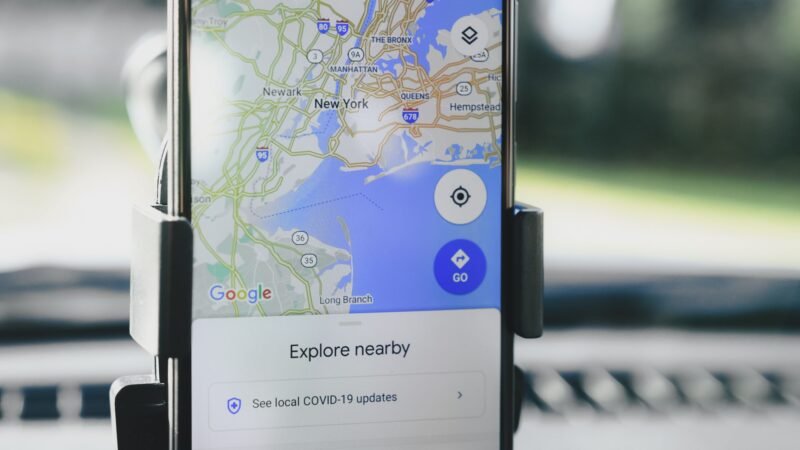
- “Near me” is interpreted by Google as a location-modifier query — your physical proximity, relevance, and prominence determine rank, not keyword density in your page title.
- Google uses the searcher’s location context when available, along with the query and local ranking systems, to return nearby relevant results. Businesses that perform well for relevant city + service terms are often better positioned to appear for near me variants when the searcher is physically close enough and the business has sufficient prominence — optimising specifically for the phrase “near me” in your content adds no documented ranking benefit.
- The core lever is your Google Business Profile: category accuracy, completeness, reviews, business details, and prominence signals usually influence near me visibility more directly than adding “near me” phrases to on-page copy.
- On-page local signals — NAP consistency, LocalBusiness schema, location landing pages with genuine service-area content — reinforce organic ranking for the localised query set that underpins near me results.
- AI Overviews appear for some near me queries but remain inconsistent by query type, market, and device. GBP data, structured business information, reviews, local landing pages, and reputable third-party mentions may help AI systems understand and summarise a business, but AI-generated local results remain query-dependent and are not guaranteed.
Methodology note: ranking factor claims below are labelled by evidence type — Google-documented, Google-recommended, practitioner-observed, or unconfirmed. No claim is presented as a confirmed ranking signal unless Google has stated it publicly. Google-documented claims are sourced from Google Business Profile and Google Search Central documentation; practitioner-observed claims should be treated as field-tested guidance, not confirmed ranking weights.
What “Near Me” Actually Means to Google
“Near me” is not a keyword Google matches literally — it is a location intent signal. When a user types “pizza near me” or “dentist near me”, Google uses the searcher’s location context when available, along with the query and local ranking systems, to return nearby relevant results ranked by relevance, distance, and prominence — the same three factors that govern all local pack rankings.
Google has stated publicly that it uses a searcher’s device location when available and falls back to IP-based location estimates when not. There is no documented benefit to repeating the phrase “near me” as a keyword on the page. A business that ranks for “pizza Chicago Loop” will often appear for “pizza near me” when the searcher is in the Chicago Loop. The optimisation target is local relevance and proximity, not the phrase “near me.”
Google-documented: The three local ranking factors are relevance, distance, and prominence, as described in Google’s How Google determines local ranking help article. “Near me” queries are resolved through these same factors — no separate “near me” ranking system exists in Google’s public documentation.
Near Me SEO at a Glance
| Area | What It Means | Evidence Level | What To Do |
|---|---|---|---|
| Relevance | Google must understand what your business offers | Google-documented local factor | Use accurate GBP categories, services, and local landing pages |
| Distance | Google compares the searcher’s location to businesses | Google-documented local factor | Use real address/service-area setup; do not fake locations |
| Prominence | Google evaluates how well-known and trusted a business is | Google-documented local factor | Build reviews, links, mentions, and local reputation |
| “Near me” wording in content | Google treats it as location intent, not a keyword to match | Practical SEO interpretation — no documented keyword benefit | Do not stuff “near me” into titles, headings, or body copy |
| Reviews | Review count and rating can help local ranking within prominence | Google-documented within prominence factor | Ask for genuine reviews; do not script keyword language |
| LocalBusiness schema | Helps clarify business details for Google’s systems | Google-recommended structured data | Add accurate business details; do not expect direct ranking guarantees |
| AI local answers | May summarise local business information for some queries | Evolving / query-dependent | Keep GBP, website, reviews, and third-party data consistent |
Near Me Search Volume: What the Data Shows
Interest in “near me” queries has grown steadily over the past decade. Google’s own statements and third-party keyword data show that near me queries now represent a significant share of mobile local searches:
- Google has previously reported strong growth in “near me” and nearby-intent searches — statements from Google Marketing Live 2016 cited a 900%+ increase over a five-year period. These figures are historical; treat them as evidence of intent behaviour rather than current market-size estimates.
- Older Google consumer research (2019) connected nearby mobile searches with a high rate of same-day store visits and purchases. Think With Google has published related research on nearby search behaviour, though specific figures and methodology should be verified against current sources.
- BrightLocal’s Local Consumer Review Survey 2023 found that 98% of consumers used the internet to find information about local businesses in the past year, with mobile searches driving a growing share of that traffic.
- Near me query volume varies significantly by category — emergency services (plumber near me, locksmith near me, emergency dentist near me), food and drink, and retail show the highest volume; B2B services show lower near me search rates.
The practical implication: for categories with high purchase intent and time-sensitivity (food, repairs, health, retail), near me visibility has direct revenue impact. For B2B or considered-purchase categories, the influence is smaller.
How Google Resolves Near Me Queries
Understanding the mechanics matters because it determines what you can actually control.
- Location detection: Google uses GPS (mobile), Wi-Fi triangulation, or IP address to determine the searcher’s position. GPS is most accurate; IP-based location can be off by several kilometres. Businesses cannot influence this step.
- Radius and density calibration: Google adjusts the radius it considers “near” based on query type and local business density. In a dense urban area, “coffee near me” may return results within 500 metres. In a rural area, the same query might extend five kilometres. Unconfirmed: the exact radius algorithm is not published by Google.
- Relevance filter: Google applies category and keyword matching against the business’s GBP categories, website content, and review text before ranking by distance and prominence. A business categorised only as “Restaurant” may not rank for “Italian near me” unless sub-categories and website signals establish Italian cuisine relevance.
- Pack vs. organic: Near me queries typically trigger a local pack (map + three listings). Below the pack, standard organic results appear — these may include local directory pages (Yelp, Tripadvisor, Angi) that aggregate business listings, as well as individual business websites with strong local relevance signals.
Near Me Ranking Factors: Documented vs. Unconfirmed
The signals below apply to near me queries through the same local ranking system that governs Google Maps and local pack rankings. No separate “near me” algorithm exists — the same three factors (relevance, distance, prominence) apply to both.
| Signal | Evidence Level | What to Do |
|---|---|---|
| GBP primary category accuracy | Google-recommended | Match your most specific primary service — “Italian Restaurant” not “Restaurant” |
| Physical address within or near the searched area | Google-documented (distance factor) | Cannot be changed; location is fixed — focus on prominence and relevance instead |
| GBP profile completeness (hours, photos, description, attributes) | Google-recommended | Fill every available field; add at least 10 photos; keep hours current |
| Review volume and recency | Practitioner-observed (prominence signal) | Actively ask satisfied customers for reviews; respond to all reviews |
| Review keywords mentioning service type | Practitioner-observed | Service-descriptive language in reviews appears to strengthen relevance — ask customers naturally, do not script keywords |
| Website LocalBusiness schema | Google-recommended (structured data) | Implement Schema.org/LocalBusiness with accurate name, address, phone, hours |
| NAP consistency across citations | Google-recommended (mentions as prominence signal) | Ensure name, address, and phone are identical on GBP, website, and major directories |
| Keyword “near me” in page title or H1 | Unconfirmed — no documented benefit | Avoid; Google resolves near me via location, not literal text matching |
| Keyword “near me” in meta description | Unconfirmed | Unnecessary; meta descriptions are not a ranking signal |
| GBP posts frequency | Unconfirmed ranking signal; confirmed GBP engagement feature | Post regularly for engagement, not as a ranking lever |
| Q&A section on GBP | Practitioner-observed | Seed and answer the most common customer questions; keep accurate |
| Local backlinks (chamber of commerce, local press, business associations) | Practitioner-observed (prominence) | Earn local links from genuinely local sources; avoid directory spam |
What Google Has Not Confirmed About Near Me Rankings
Google has not published a separate “near me” ranking algorithm or exact weighting for near me queries. It has not confirmed that the following tactics directly improve near me rankings:
- Adding “near me” to title tags, H1s, or body copy
- Creating dedicated “near me” landing pages
- Posting frequently on GBP as a ranking tactic
- Uploading photos on a fixed schedule for ranking purposes
- Adding many service areas beyond what a business genuinely covers
- Using “near me” language when requesting or scripting reviews
These tactics should be judged by whether they improve relevance, trust, user experience, and legitimate local visibility — not by whether they repeat the phrase “near me.”
Google Business Profile Optimisation for Near Me Queries
Google Business Profile is the central profile for Maps and local business display. Local visibility can also be influenced by website relevance, reviews, links, press coverage, directories, citations, and other web-wide prominence signals — not GBP data alone.
Category Selection
Google-recommended: Select the most specific primary category that accurately describes your main business. Google states that your primary category is the most important for how you appear in search. Secondary categories can help describe additional relevant services, but service areas should be managed separately in GBP and should reflect where the business genuinely serves customers.
Common mistakes that reduce near me visibility:
- Selecting a generic parent category (“Food & Drink”) instead of a specific one (“Ramen Restaurant”)
- Adding competitor categories to try to appear for their searches — Google may suppress listings that appear to misrepresent the business
- Not adding legitimate secondary categories for additional services you genuinely offer
Google’s category list is maintained internally and updated periodically. Use the autocomplete in GBP when selecting categories to find the most specific match — the list has over 4,000 categories in English.
Business Description
The GBP business description (up to 750 characters) is indexed and appears in Knowledge Panel results. Describe your primary services and location naturally — this is not a keyword-stuffing field. Mention the neighbourhood, district, or landmark if it genuinely describes where you operate. Google’s guidelines prohibit adding promotional language, URLs, or HTML.
Service Items
GBP allows businesses to list individual services with descriptions and prices. These service items are indexed and can influence what near me queries you appear for. A plumbing business that lists “Emergency Drain Unblocking” as a service item has a stronger relevance signal for “emergency plumber near me” than one that only has a generic description.
Photos
Google recommends that businesses add photos to their GBP. Photos do not directly influence local ranking in Google’s documented factors, but Google has stated that complete profiles with photos receive more customer actions. Practitioner-observed: profiles with more photos tend to outperform those with few photos in high-competition categories, though this correlation is not an established causal ranking factor.
Minimum recommended photo set:
- Exterior: at least 3 shots from different angles and distances
- Interior: at least 3 shots showing the space
- Products or services: representative shots of what you offer
- Team: at least one photo of staff in context
Reviews
Review quantity and average rating are practitioner-observed prominence signals. Google does not publish a formula for how reviews influence local ranking, but practitioners consistently observe that businesses with more reviews and higher average ratings outperform those with fewer, controlling for distance and category match.
Google’s guidelines on review generation: You may ask customers to leave reviews. You may not offer incentives, create fake reviews, or ask only satisfied customers selectively in a way designed to filter negative feedback. Violating these guidelines can result in review removal or GBP suspension.
Responding to reviews — both positive and negative — is Google-recommended behaviour. Google’s help documentation states that responding to reviews shows that you value customer feedback. Review quality and volume are also core E-E-A-T trust signals for local businesses.
On-Page Local SEO for Near Me Visibility
The local pack (which handles most near me clicks) is driven by GBP data. Organic rankings below the pack — and the website signals that support overall local authority — are where on-page work matters.
What Does NOT Help for Near Me
- Do not add “near me” to your title tag or H1. Google resolves the query via location data, not text matching. A title like “Best Pizza Near Me | Joe’s Pizzeria Chicago” does not improve near me rankings and looks spammy to users who found you via other queries.
- Do not create a page titled “Pizza Near Me”. Google identifies keyword-stuffed local pages and they rarely rank. Even if they briefly appear, they typically convert poorly.
- Do not use “near me” in image alt text or schema markup. These are not indexable ranking signals for this query type.
What Does Help
On-page signals that reinforce local organic ranking — which underpins the full near me query ecosystem — include:
Location landing pages
For single-location businesses: one location page at your website root (or /contact) with complete address, phone, hours, an embedded map, service descriptions, and LocalBusiness schema. This page should exist for users — it should contain genuinely useful information about your specific location, not a thin template.
For multi-location businesses: a dedicated page per location at a logical URL structure (e.g., /locations/chicago-loop/) with unique content for each location — different photos, location-specific staff or history, area-specific service notes. Duplicate location pages with swapped city names rank poorly and are a Google quality guideline concern. See our multi-location local SEO guide for a full URL structure and content framework.
Service area content
If you serve customers at their location (plumbers, cleaners, delivery businesses), create service area pages that describe what you do in each area, why customers in that area choose you, and any location-specific context. Thin pages listing only a postcode and your phone number add no value and typically do not rank.
Title tags and H1s
Use the format: [Primary Service] in [City/Neighbourhood] | [Business Name]. This is the standard practitioner pattern for local page titles. It targets the city + service query set — which is the query set that generates near me results when the searcher is in that city.
NAP in footer
Your business name, address, and phone number in the footer of every page ensures consistent NAP across the site. This is Google-recommended for local businesses.
LocalBusiness Schema for Near Me Queries
Schema markup does not directly cause a business to rank in the local pack. It is a Google-recommended structured data format that helps Google parse your business information accurately — which reduces friction between your website data and your GBP data, and may help Google confirm the relevance signals it needs to rank you.
The minimum recommended implementation for a local business:
<script type="application/ld+json">
{
  "@context": "https://schema.org",
  "@type": "LocalBusiness",
  "name": "Joe's Pizzeria",
  "image": "https://example.com/images/joes-pizzeria.jpg",
  "address": {
    "@type": "PostalAddress",
    "streetAddress": "123 Main Street",
    "addressLocality": "Chicago",
    "addressRegion": "IL",
    "postalCode": "60601",
    "addressCountry": "US"
  },
  "geo": {
    "@type": "GeoCoordinates",
    "latitude": 41.8827,
    "longitude": -87.6233
  },
  "telephone": "+1-312-555-0100",
  "openingHoursSpecification": [
    {
      "@type": "OpeningHoursSpecification",
      "dayOfWeek": ["Monday","Tuesday","Wednesday","Thursday","Friday"],
      "opens": "11:00",
      "closes": "22:00"
    },
    {
      "@type": "OpeningHoursSpecification",
      "dayOfWeek": ["Saturday","Sunday"],
      "opens": "12:00",
      "closes": "23:00"
    }
  ],
  "url": "https://example.com",
  "priceRange": "$$"
}
</script>
Use the most specific @type that matches your business (e.g., Restaurant, Plumber, MedicalClinic — see the full list at schema.org/LocalBusiness). The geo property can help clarify your business location in structured data, but it should not be treated as a local-pack ranking shortcut or a replacement for an accurate Google Business Profile.
Citation Building for Near Me Visibility
Citations — mentions of your business name, address, and phone on external directories and websites — are a documented prominence signal in Google’s local ranking documentation. Google’s help text specifically mentions “the number of times information about a business appears on the web” as a prominence factor.
Priority citation sources for near me visibility:
- Tier 1 (essential): Google Business Profile, Apple Maps, Bing Places, Facebook Business, Yelp, Tripadvisor (if applicable), LinkedIn (for B2B)
- Tier 2 (category-specific): Angi/HomeAdvisor (home services), Healthgrades/Zocdoc (healthcare), OpenTable/Resy (restaurants), Avvo (legal), Houzz (design and construction)
- Tier 3 (local): Local chamber of commerce directory, local newspaper business listings, city/neighbourhood business associations
Practitioner-observed: After core platforms are accurate, adding more citations tends to produce diminishing returns on near me ranking. NAP accuracy across existing citations matters more than raw citation count at the margin. Prioritise fixing inconsistencies before adding new listings. For earning backlinks from genuinely local sources — which strengthen the prominence factor — see our local link building guide.
Near Me Queries Across Device Types
The near me experience differs significantly by device:
| Device | Near Me Behaviour | Implication |
|---|---|---|
| Mobile (GPS enabled) | Most accurate location; typically shows local pack prominently above organic | GBP optimisation is the primary lever; mobile UX matters for clicks and calls |
| Mobile (GPS disabled / browser) | Falls back to Wi-Fi or IP location; results may be less geographically precise | City + neighbourhood targeting in on-page signals becomes more important |
| Desktop | IP-based location; less accurate; local pack appears but results may be wider geographic radius | City-level optimisation more important than hyperlocal signals |
| Voice search (Google Assistant) | Uses device GPS; single answer returned rather than a list; GBP data is primary source | Complete GBP with accurate hours and phone is critical; schema reinforces data accuracy |
Mobile accounts for the majority of near me searches. Google’s older nearby-search data showed that many nearby mobile searches led to same-day store visits and purchases, but these figures should be treated as historical intent evidence rather than current market-size estimates. The near me intent remains high-urgency and overwhelmingly mobile-first.
Near Me in AI Overviews and AI Search
AI Overviews appear inconsistently for near me searches. As of mid-2026: AI Overviews are rare for transactional near me queries (e.g., “coffee near me”, “plumber near me”) where Google predominantly shows the local pack. They appear more frequently for informational near me queries (“best dentist near me reviews”) or comparative queries (“best pizza near me under $15”). Behaviour varies by query, market, and device. Test your own target queries in incognito before drawing conclusions.
When AI Overviews appear for local queries, they may reflect information from sources such as:
- GBP data (name, rating, address, hours)
- Review platforms (aggregate ratings and review excerpts)
- Business websites with strong structured data and clear service descriptions
- Local press coverage and directory mentions
There is no confirmed mechanism by which a business can directly engineer appearance in a local AI Overview. Consistent business information across GBP, the website, reviews, and reputable third-party sources can help search and AI systems understand the business more accurately, but AI-generated local results remain query-dependent and are not guaranteed.
For ChatGPT Search and Perplexity: both can return local business recommendations when asked. These systems may use web content, structured data, search indexes, third-party sources, and available business information. Their local-source mix is not always transparent, so avoid assuming GBP-only or schema-only visibility. A business website with complete structured data, reviews embedded via schema, and mentions in local press has a stronger signal footprint for AI search systems than a GBP-only presence. See our comparison of ChatGPT, Perplexity, and Google AI Overviews for how each system handles local queries differently.
Common Near Me SEO Mistakes
| Mistake | Why It Doesn’t Work | What to Do Instead |
|---|---|---|
| Adding “near me” to page titles and H1s | Google uses location context and local ranking systems; repeating “near me” has no documented ranking benefit | Target “[service] in [city]” — that’s the canonical form Google matches |
| Creating a standalone “near me” page | Thin keyword-stuffed pages rarely rank; even when they do, they convert poorly | Create genuine location/service pages with complete, useful content |
| Keyword stuffing “near me” in reviews | Violates Google’s review policies; review text content influence is unconfirmed | Ask customers for honest reviews describing their experience naturally |
| Setting service area to your entire country | Overly broad service area can weaken local relevance signals | Set service area to the cities/regions you genuinely serve |
| Using a P.O. Box as your GBP address | Google requires a physical address you can receive customers at (or use service area) | Use your real physical address, or set up as a service-area business with no address shown |
| Ignoring negative reviews | Unresponded negative reviews can deter clicks and signal low engagement to Google | Respond professionally to all negative reviews; address complaints where possible |
| Inconsistent NAP across citations | Conflicting business data confuses Google and dilutes prominence signals | Audit major citations quarterly; fix variations in suite numbers, abbreviations, and phone formats |
Near Me Ranking for Service Area Businesses
Service area businesses (SABs) — plumbers, cleaners, mobile pet groomers, landscapers — operate from a base location but serve customers at their addresses. GBP allows these businesses to hide their physical address and instead define a service area by city, county, or radius.
Google-documented: Service-area businesses can appear for relevant local searches in areas they genuinely serve, but visibility still depends on relevance, distance, and prominence. However, Google’s documentation notes that distance is still a factor even for SABs — businesses whose base location is closer to the searcher tend to rank better within an overlapping service area. Practitioner-observed: SABs without a shown address generally rank less well than address-visible businesses in the same area, all else equal.
For SABs, the practical focus is:
- Define service area accurately to the areas you genuinely cover — over-claiming service areas can reduce relevance and trust, and may conflict with Google’s service-area business guidance
- Accumulate reviews that mention specific city or neighbourhood names naturally
- Build citations on local directories in each service area city
- Create service area landing pages on your website for each major market you serve — see the multi-location local SEO guide for page structure and unique content requirements
Tracking Near Me Rankings
Standard rank tracking tools do not capture near me results accurately — they report rankings from fixed IP locations, not from the searcher’s physical position. To track near me performance meaningfully:
- Google Business Profile Insights: Reports how many users found your listing via direct search (searching for your name) vs. discovery search (searching for a category or service). Discovery impressions are a proxy for near me and category-level visibility.
- Google Search Console: Shows clicks and impressions for queries that triggered your site. Filter for queries containing your city or neighbourhood name — these are the canonical equivalents of near me searches from users in your area.
- Local rank tracking tools: Whitespark Local Rank Tracker, BrightLocal, and SE Ranking’s local tracking features allow you to specify geographic coordinates and device type, giving a closer approximation of what a user at that location would see.
- Manual checks: Search on a mobile device with location enabled while physically in your target area. This gives a direct view of your local pack position for near me queries. Use incognito mode to reduce personalisation effects.
What Actually Moves Near Me Rankings
Based on Google’s documented factors and consistent practitioner experience, these are the changes with the highest probability of improving near me visibility:
- Correct your GBP primary category if it is currently at a generic level — this is one of the highest-leverage single changes for near me relevance, as category accuracy is one of the strongest controllable relevance inputs in GBP optimisation.
- Build review volume — if you have fewer reviews than your top competitors in the local pack, closing that gap has a measurable effect. Aim to get review generation into a repeatable operational process (post-purchase email, receipt prompt, staff verbal ask).
- Complete your GBP profile — fill in attributes (accessibility, payment methods, outdoor seating for restaurants, etc.), keep hours accurate including holiday hours, and add a complete service list.
- Fix NAP inconsistencies on the four or five most important citation sources in your category before expanding to more directories. A local SEO audit is the fastest way to surface these inconsistencies systematically.
- Implement LocalBusiness schema on your website if you have not already done so — this is a low-effort, high-signal action for a business with no structured data.
- Improve website relevance signals — ensure your homepage and key service pages clearly describe what you do and where you do it, in natural language, with your city and service type in headings and copy.
Near Me SEO Myths
| Myth | Reality |
|---|---|
| Add “near me” to every title tag | No documented ranking benefit; Google resolves near me via location data, not text matching |
| Create one “near me” page to capture all near me traffic | Usually thin and unnecessary; genuine location/service pages serve the same intent and rank better |
| Add every nearby city as a service area | Service areas should reflect real coverage; over-claiming can reduce relevance and trust |
| Upload photos daily to rank higher in the local pack | Photos help trust and completeness; a fixed upload schedule as a ranking lever is unconfirmed |
| Reviews must include “near me” or city keywords | Do not script review language; keyword-scripted reviews violate Google’s review policies |
| LocalBusiness schema directly improves Google Maps ranking | Schema supports entity understanding, not guaranteed local-pack rankings — Google’s own docs do not present it as a Maps ranking shortcut |
| Post frequently on GBP to signal activity and improve ranking | GBP posts are confirmed for engagement and Knowledge Panel display; posting frequency as a ranking signal is unconfirmed |
Near Me vs City + Service: How They Relate
“Near me” and “city + service” searches are connected but not identical. A city-modified query such as “emergency plumber Dallas” uses an explicit location in the query. A “near me” query uses the searcher’s location context instead. The same local SEO foundations support both: accurate GBP data, relevant categories, reviews, local landing pages, links, citations, and business prominence.
The practical distinction: for a business targeting searchers in a specific city, optimising for “plumber Dallas” in page titles and on-page content is a concrete, trackable content action. For near me visibility, the equivalent action is not putting “near me” into titles — it is ensuring your business has enough relevance, proximity, and prominence for Google to surface it when a searcher in that city types the near me variant. The ranking work is the same; the keyword targeting framing is different.
Frequently Asked Questions
Does adding “near me” to my website’s title tag help me rank for near me searches?
No. Google uses the searcher’s location context when available, along with local ranking systems, to return nearby relevant businesses. The phrase “near me” in your title tag provides no documented ranking benefit for near me queries and may look spammy to users who land on your page via other search terms.
Why am I not ranking in the near me local pack even though I’m physically close to the searcher?
Distance is one of three factors — relevance and prominence also apply. If competitors with less proximity are outranking you, their GBP categories are likely a better relevance match, their review volume is higher, or their website signals are stronger. Start with category accuracy on your GBP, then review volume.
My business is in the suburbs — can I rank for near me in the city centre?
For searchers physically in the city centre, your distance disadvantage is real. You can close the gap through stronger relevance and prominence signals — higher review volume, more complete GBP, better website authority — but proximity is a genuine factor. The most effective approach is to rank strongly within your own physical area rather than trying to override distance with other signals.
Can I rank for near me searches in a city where I don’t have a physical location?
Usually not unless the business is genuinely eligible to serve that area and has a valid Google Business Profile setup. Service-area businesses can appear for relevant local searches in areas they serve, but visibility still depends on relevance, distance, and prominence. Do not create fake addresses or service areas just to target nearby cities.
Do GBP posts help near me rankings?
GBP posts are not a confirmed ranking signal. They are confirmed to appear in your Knowledge Panel and can generate engagement. Post regularly for customer communication and engagement, not as a ranking tactic.
How long does it take to see results from near me optimisation?
Category and GBP profile changes can affect ranking within days to a few weeks. Review accumulation is a slower process — building meaningful review volume typically takes months. Citation fixes take two to six weeks to propagate across major platforms. Website changes take four to twelve weeks to influence organic rankings.
Do reviews mentioning “near me” or my city name help rankings?
Reviews that naturally mention your service type and location may reinforce relevance signals — this is practitioner-observed, not confirmed by Google. Do not ask customers to include specific keywords in reviews; this violates Google’s guidelines. Ask customers to describe their experience — location and service references arise naturally when they do.
Is it worth creating a dedicated “near me” page on my website?
No. These pages rarely rank, convert poorly, and represent thin content. Create genuine location and service pages with complete, useful information instead — these pages serve the same audience and are far more likely to rank and convert.
What’s the difference between near me SEO and local SEO?
Near me SEO is a subset of local SEO. Local SEO covers all tactics for visibility in geographically-bounded searches, including city + keyword queries, neighbourhood terms, local pack rankings, and Google Maps presence. Near me queries are a specific format within local search — the optimisation work is identical, because Google treats “near me” as a location substitution for the city or area the searcher is in.
How does Google handle near me searches for voice assistants?
Voice searches typically return a single answer rather than a list. Voice assistants often rely on structured local business information such as business name, address, phone number, hours, categories, ratings, and proximity. A complete and accurate Google Business Profile can help, but Google has not published a simple formula for which business is selected for every voice “near me” query. Schema markup on your website can clarify your business details, but should not be treated as a replacement for an accurate Google Business Profile.
Sources
- Google — How Google determines local ranking
- Google — Choose the right business categories in Google Business Profile
- Google — Policies for reviews
- Google — Local business structured data documentation
- Google — Service area businesses in Google Business Profile
- Schema.org — LocalBusiness type
- BrightLocal — Local Consumer Review Survey 2023
TL;DR “Near me” is interpreted by Google as a location-modifier query — your physical proximity, relevance, and prominence determine rank, not keyword density in your…